Tuesday, February 14, 2012

Give me Fragrant Lilies any Day


'Conc D'Or' lilies
Day 26
The Daily DuBrule


Today is Valentine's Day and all thoughts turn to roses. Well, roses are great, but give me fragrant lilies ANY day! 


Nowadays in most parts of Connecticut, you have to really love your lilies to grow them. That is because of the dreaded red lily leaf beetle that invaded our gardens a few years ago. This nasty creature can destroy a stand of lilies in a few weeks. I start scouting for the lily leaf beetle in April, as its alternate host is Frittilaria. I then begin my daily routine of inspecting my lilies and squishing all the egg cases and beetles I see. Once or twice a season I spray them with neem, an organic spray, but usually I scout and squish. The resulting gorgeous, clean, fragrant, to-die-for lilies are shown above.
Damage from lily leaf beetles-yuck!
I am determined to keep growing the fragrant lilies I love. Many have just given up. What I have done is locate all the lilies I have chosen to keep front and center where it is easy to inspect them, and consequently, enjoy them. In the morning, I bend down low and look up at the undersides of the leaves. I make my rounds of the five place I have lilies growing. It's quick and it gets me out in the garden early every day. When I get home, if it's before dark, I pour myself a glass of wine and wander around inspecting my "estate". In the process, I check again. This works for me.


I decided last year to eliminate all non-fragrant Asiatic lilies from my garden. After scouting and squishing from April until they bloomed in June, I realized it wasn't worth it for me. If a lily wasn't intoxicatingly fragrant, I didn't need it. I did leave my patch of non-fragrant, old fashioned orange tiger lilies as they came from a dear old friends garden who is no longer gardening on this earth. They have sentimental value beyond belief. They are right by my garage door so I have to check on them whenever I go to my car.
Asiatic lilies surrounded by snowball Viburnum blossoms. Lovely as they were, I removed them from my garden.
When I used to have an FTD flower shop and sell flowers on Valentine's Day, I used to give my customers choices. Sure, we had the classic red roses, as well as roses of all colors. But I would also put together mixed bouquets with a theme. The fragrant bouquet was the most popular alternative to plain old roses- oriental lilies, freesias, tuberoses, and a couple of purple roses that smelled like heaven on earth.

Monday, February 13, 2012

Wonderful Interweavings

My candy lilies (Pardancanda) with self sown Agastache

Day 26
The Daily DuBrule


I am a cottage gardener at heart. I think I get more joy from unexpected combinations in the garden than the ones that I plan. They never stop surprising me, how perfect they can be, on their own, without my help. 


The trick to embracing self sown plants is knowing when to thin the herd. Plants like anise hyssop (Agastache foeniculum), feverfew (Tanacetum parthenium), and plume poppy (Maclaeya cordata) can easily overtake an orderly garden and out-compete plants that you really want to grow and thrive. Yet, allowing some moderate self seeding and keeping an eye on the result can create a very interesting, much softer looking garden.
Iris ensata 'Gusto' with an unknown white daisy. Anyone recognize this self sown beauty?
When I first started my raised be vegetable gardens, a soft and airy white daisy appeared. Growing about 3 ft. tall and blooming all summer long, I let it grow because it was pretty and it filled in a lot of empty space that I hadn't had time to plant yet. Now that I know what it does, I purposely thin it out when I see it and only allow it where it will fit in without being too greedy.
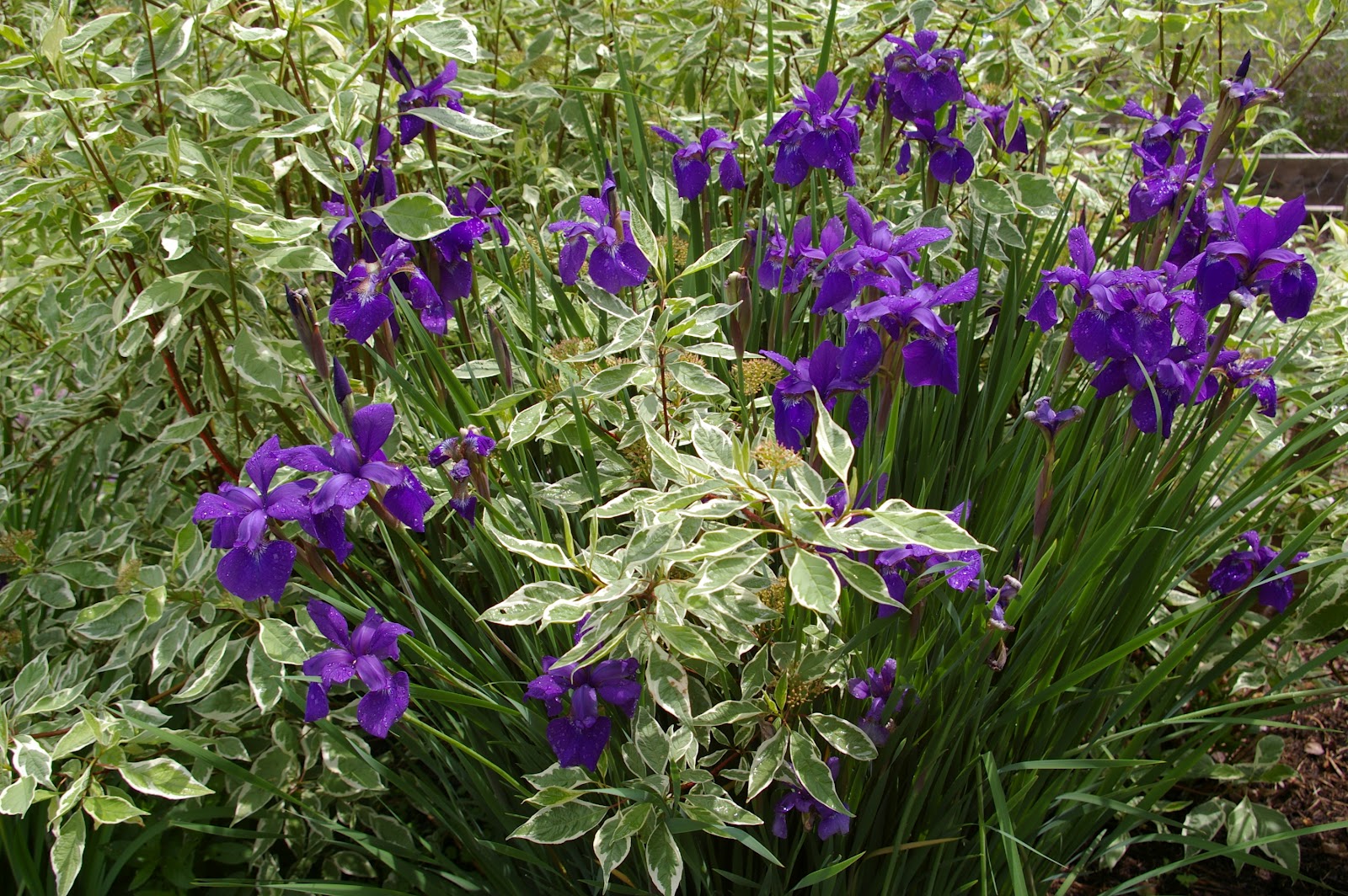
The perfect low maintenance interweaving- vigorous Siberian irises underplant and intertwine with a variegated redtwig dogwood.
One of the most vigorous self sown perennials in my gardens is feverfew. I have to admit, I love this plant. It makes a great cut flower, always available to me, an excellent filler in any arrangement. It grows in my hot, sunny courtyard and in the shade. I let it seed into my wild and wet shrub border where the aromatic foliage helps to throw off the noses of the deer. Naturally, this is a REALLY heavy self sower and I have to be vigilant in the spring that it doesn't take over the landscape. It's easy to spot; if you miss it, you will smell the pungent foliage as you are feeding, weeding, and mulching.
I LOVE this! Feverfew seeded in amongst the branches of Physocarpus 'Centerglow'.
Maclaeya seeded next to Physocarpus 'Center Glow'
Not everyone can garden like this. To some folks, these plants are a nuisance to be eliminated from their orderly gardens. Not me. I find the combinations that they create an inspiration. As I continue to grow as a gardener and a designer, I will use these wonderful interweavings to make magic in the garden.

Sunday, February 12, 2012

Flowers Having Fun

Lupines embrace a rose
Day 25
The Daily DuBrule


I am in a playful mood today. I have spent a lot of time lately picking out fun photos of "plants in love" or "fooling around". I get such a kick out of coming upon this secret love life that flowers have. It is delightful to think that every day is Valentine's Day to the flowers in our world!


I have also been thinking about the principle of Feng Shui that to enliven your relationship sector you should use powerful symbols of love (such as hearts) or things in pairs.


How fitting it is to study these images when the rest of the world is turning to commercial displays of love. 


Say it with flowers!
Peas lovingly intertwine with 'Bull's Blood' beets

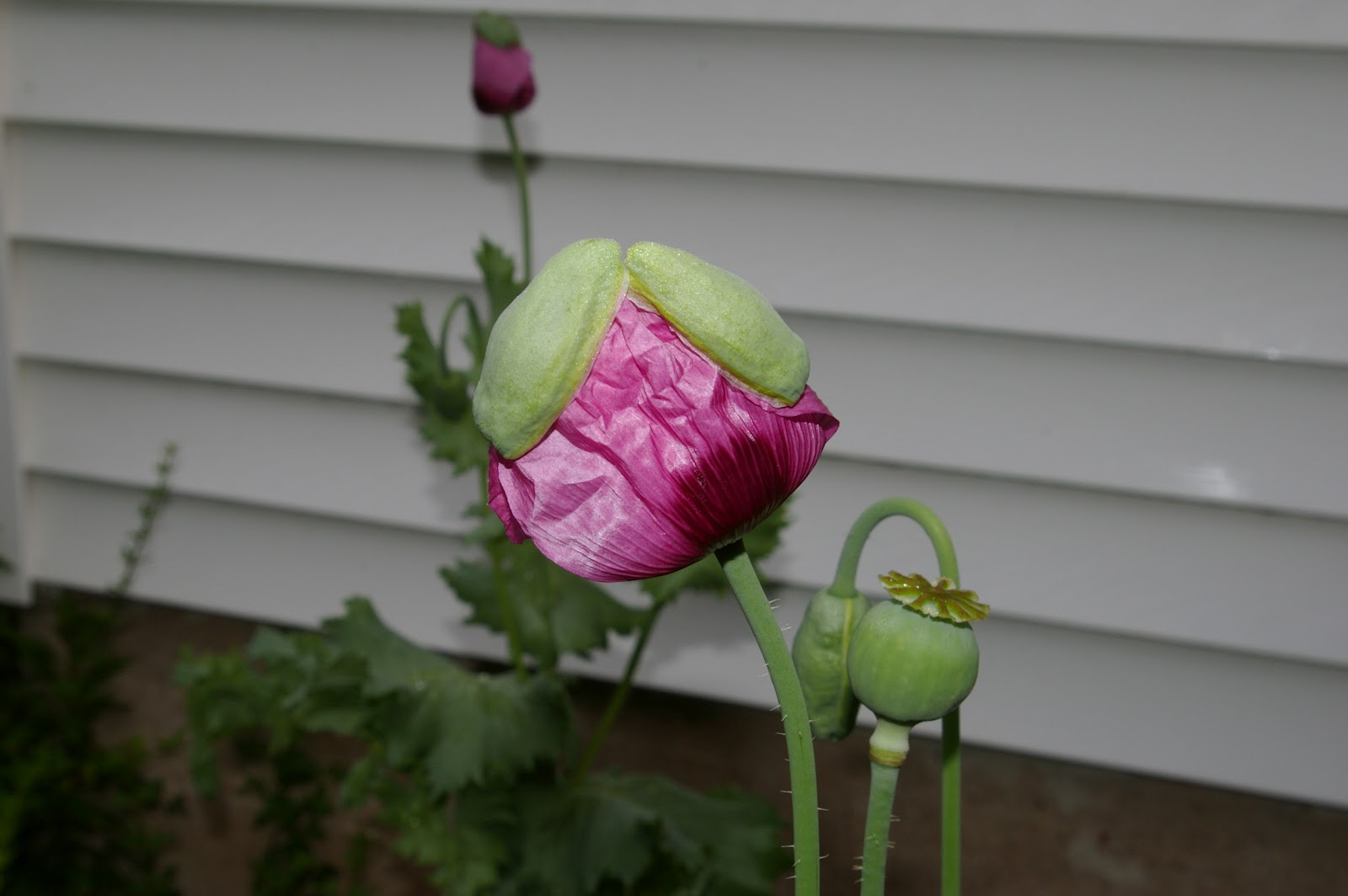
   Breadseed poppies with twin caps

  
Broom blooms with yellow Doronicum daisy
The happy couple- a pair of Allium 'Mt.Everest' flowers have a baby floret


'Gold Plate' yarrow popping out of the middle of a hydrangea
The bees made a smiley face on my self sown giant sunflower!

Saturday, February 11, 2012

Why I Love Bachelor's Buttons

Centaurea montana 'Amethyst in Snow'

Centaurea montana 'Amethyst Dream'


Day 24
The Daily DuBrule

I am constantly being asked to give talks about Succession of Bloom in the Perennial Garden. I wrote a book about this subject, specific to Connecticut, tracking when plants bloom by variety. I did this because I was completely frustrated with the general bloom period descriptions in books and catalogs that are written for the entire country, not our state.

When plants bloom is key to an all-season, colorful garden. But when plants emerge is also important. April can be a tough month in the garden if you haven't invested in spring blooming bulbs or flowering shrubs. Many perennials are still dormant, or slowly emerging. You get so excited about the flowers of spring and just keep walking around your borders saying "come on, grow!" That is why I love plants that "bulk up" early. What that means to me is a plant that emerges with a strong crown of foliage and adds a good amount of greenery to the garden. Centaurea montana, also called perennial bachelor's buttons, fits that bill.

Ten years ago, I primarily grew the blue flowered form, the straight species. Always admired in the garden, it resembles a blue thistle flower. Then I found out about the pure white form. The real breakthrough came with 'Amethyst in Snow', pictured above. I was in love. What a gorgeous bi-color blossom! Last year, I got my hands on 'Amethyst Dream', a solid purple introduction. Purple is my favorite color and I was in heaven.

I like Centaurea montana because it is versatile. It will grow in sun or partial shade and in almost any kind of soil. The flowers begin blooming in late May and continue into mid to late June, giving me color when the May flowers are fading and then happily combining with the June bloomers. If you deadhead it, you will prolong the bloom. After all flowering is done, I cut the flower stalks right down to basal foliage. By then, there are so many other plants filling out the garden and blooming their hearts out that you don't miss this plant.

I use perennial bachelor's buttons under and near plants that take a long time to sprout and leaf out in the spring. Butterfly bushes, Caryopteris, ferns, hydrangeas, Eupatorium, Hibiscus, Asclepias are just a few of the plants that come to mind. It is a great design trick that keeps your garden full and lush every month of the growing season.

Friday, February 10, 2012

Hearts in the Garden


Day 23
The Daily DuBrule

Valentine's Day is just around the corner and everywhere you look you see hearts. I have been collecting heart rocks for many years. It is such a fun hobby. When I am at the beach, or walking along a babbling brook, I am always on the lookout. When I am digging in a new client's garden and I find one or more heart rocks, I think to myself "this person is going to be a joy to work with". I use little ones as decorative toppings for my houseplants. Once you start looking for them, they are everywhere, even in the gravel in a stone path!

One time I went to visit a new client and noticed her gorgeous collection of heart rocks. She invited me to come inside. They had built their house, and their chimney had the most amazing grouping of large, perfect heart rocks I had ever seen. She explained that each one was for a family member. I will never forget how the sight of that chimney made me feel. 

Dicentra 'Burning Hearts'
I also incorporate hearts in the garden in other ways. My friend Kim Kuzina has made some lovely heart shaped troughs. You can see one planted in the picture at the top of this post. She also made a beautiful heart shaped birdbath for my husband and me as a wedding present. The bowl is a heart, and a smaller heart is raised in the center as a perch for the birds. It is reinforced with heavy mesh hardware cloth so it can stay out all year. The birds love it!

Old fashioned bleeding heart with self sown Silene dioica
Our native Viola labradorica has tiny purple heart shaped leaves!
Cercis canadensis 'Forest Pansy'


Of course there are lots of flowers and leaves that are heart shaped. From common Philodendron and Pothos houseplants to bleeding hearts of all sorts, to the gorgeous burgundy heart shaped leaves of Cercis canadensis 'Forest Pansy', it is easy to fill your world with this powerful symbol of love. 

Thursday, February 9, 2012

I Wish It Was All About the Plants Sometimes

Day 22
The Daily DuBrule

What's a business owner to do... Yesterday I hit the wall with all of the NON-PLANT responsibilities of owning Natureworks. I spent an hour downloading a new "app" for my Blackberry so I could use it to take credit cards at off-site events. Truthfully, I didn't even know how to do this and had to ask a younger staff person to help me. I had never downloaded an app before. I dealt with anti-virus software that was incompatible with my new computer cash registers. I stressed about bar code labels that wouldn't print on our label making machine. I even considered how to use QR codes (those funny little square black and white things you see on everything nowadays) to market my business.

I am being dragged kicking and screaming into the 21st century and it isn't easy. The reality of today's modern business world is that you can't ignore all of this newfangled stuff. You snooze, you lose. You don't change and the world passes you by. Some days I am pretty proud of my nearly 60 year old self and all that I am courageous enough to do.  Yesterday, I needed to be talked down off the cliff. I wanted to jump back to the mid 1970's when a young, idealistic gardener dreamed of growing plants and tending gardens for a living.

Wednesday, February 8, 2012

A Winter Blooming Wonder

Winter jasmine
Day 21
The Daily DuBrule

I have a plant in my garden that has been blooming on and off since last November. Winter jasmine (Jasminum nudiflorum) is really fun to grow. It is classified as a vine yet it doesn't cling and it doesn't twine. It has long, leafless branches that reach outwards and upwards. You can tie them to a trellis or let them drape over a stone wall. If they touch the ground, they will root.

The flowers open on warm days in late fall, winter, and early spring. If the temperature drops into the low 20's, the open flowers will freeze but the buds will be fine. The next warm spell means more flowers! They are a sunny yellow color that cheers me up every time I look out the living room window.

I never thought this zone 6 plant would be hardy in my Middletown garden but I decided to give it a try anyway. I sited it on the south side of the house, in a warm, sheltered alcove. It has been thriving ever since.

I wish it was fragrant. One would think, being a jasmine, that it would be. Alas, it is not. But, it has one feature that can't be beat in the winter time- it makes a wonderful, long lasting cut flower! Because the stems are green, I cut a bunch of them one day to embellish a bouquet of cut flowers. Imagine my surprise when these branches burst into bloom, lasting long past the daisies I had purchased.

I just glanced outside on this February morning. The sun is rising and the sky is glowing bright pink. It is 27 degrees out and my winter jasmine is in full bloom, backlit by this magnificent sunrise. Life is good.