Friday, February 17, 2012

February Flowers- What's Up with That?

Daffodils in bloom in February?
Day 31
The Daily DuBrule

I was teaching Planting and Plant Care for the NOFA Organic Landcare Course in New Haven at the CT Agricultural Experiment Station today. As I cruised in to give my talk, I saw a DAFFODIL IN FULL BLOOM! Eek! What?!? I know we are having a mild winter, but this beats all. I spoke out loud to myself in my car..."my God, look at that". When I arrived and was hanging out with the students before the class, I told a friend what I had seen. A couple of folks gathered around, concerned, asking me what's up. I said... wait for it... THE WORLD IS COMING TO AN END! Only kidding. :) 

Anyway, we are in total fast forward with the spring season. I returned to Natureworks and saw our 'Arnold's Promise' witch hazel in FULL BLOOM, our winter jasmine in full bloom, and all the winter aconites and snow drops blooming their heads off in the beds by the driveway and the front walk. Even a few 'Cream Beauty' snow crocuses had joined the party. Now, granted, these bulbs are on the south side and near pavement and of course they are warmer than all the other plants, but people, this is a TREND here. I came home, walked out of my garage, only to be greeted by snowdrops and Helleborus 'Candy Love' and H. niger. AND my two witch hazels in bloom. Being someone who is a total geek about what blooms when in CT, I know we are 2-3 weeks early.

Enjoy the pictures below of other developments on this scene... 


I just found out one of my growers has pansies ready!

 I picked white weeping cherry branches to force for the flower show next week. They are moving right along and I hope they don't open too soon!

I also picked Azalea mucronulatum to force. These usually open in early April. The buds look pretty big to me.

Thursday, February 16, 2012

Eye Candy- My Amazing Japanese Irises

Feast your eyes on these dramatic beauties
Day 30
The Daily DuBrule

Today I want to keep it simple. I am preparing for a big class on Saturday, heading into the shop to load up for the flower shop, working on an estimate, and finishing up a plan. So, I decided to treat you to a picture show of my amazing Japanese irises.
I am blessed (?) with heavy, wet, thick clay soil. We're talking about the stuff you could make pottery with. In the spring in my "back forty" you dig a hole, let it sit open for a few days, and it fills with water. Wait too long and the water turns green. That was an eye opener for me when I was preparing to plant tomatoes my first year here. Thus, I grow vegetables in raised beds. Not one to be discouraged by conditions beyond my control, I simply thought "don't fight the site". And that is when my love affair with Japanese irises began.
In other homes I have lived in, the conditions have been the opposite. Sandy soil or lean, starvation soil under trees on rock ledges. Japanese irises hate that. They love acidic, moist soil. My first pH test of my yard came in at a ridiculous 4.3. I have amended the soil since, but let's just say its tending toward acidic.
I started taking home any Japanese iris that caught my fancy. I always chose the smallest pots possible, usually a 5 pt. pot size. One fan of foliage, a flower or two was what I started with. The pictures you are seeing are after a mere two years in my garden. 40+ flowers per plant, all reaching 3-4 feet tall. They LOVE it here!
The best part is, I do NOTHING except cut them down with my garden sickle at the very end of the fall. In fact, this year, I did it on a mild day in January. No feeding, NOTHING ELSE. They make great landscape plants and make my heart soar in late June and July when they burst into bloom. I'm lovin' it.

Wednesday, February 15, 2012

Chocolate Plants-Who Knew?

Chocolate cosmos- the flowers really smell like chocolate!
Day 28
The Daily DuBrule


Did you get chocolate for Valentine's Day? How about chocolate plants? What?!? I am talking about plants that either smell like chocolate or have flowers or leaves that are the color of chocolate or have chocolate in their variety name. I am not the only one to think about this concept. 

Check out this link: http://www.chocolateflowerfarm.com/  

The Chocolate Flower Farm on the west coast is a nursery devoted entirely to this concept! Think about it. Among some of the plants that they carry that I also sell are 'Hot Cocoa' rose, Eupatorium rugosum 'Chocolate', Lysimachia congestiflora 'Persian Chocolate', and Rodgersia pinnata 'Chocolate Wing'. In the spirit of this idea, I also thought about Heuchera 'Mocha' and the many "chocolate" bell peppers we sell as seedlings in May. What a fun idea to ponder!


A few years ago I visited Wave Hill in New York. I was completely enchanted by one of the gardens that featured plants with burgundy flowers and foliage. I spotted a burgundy leaf variety of one of my favorite summer trees, mimosa (Albizia julibrissin) and I was in love. The delicate foliage of mimosa trees wiggles in the breeze. They fold up at dusk, making it even more of an action plant. The pink puffy flowers start appearing in July and last until the end of summer. Hummingbirds love them. This plant has an annoying tendency to self sow, which means many people won't plant it. That doesn't bother me, I can deal with that in a few different ways. Because it grows quickly, and blooms on current year's wood, it is a bit brittle and my green leaf form sustained a lot of damage in the Halloween blizzard of 2011. Not to worry. A good hard cutback will do this plant good.
Albizia 'Summer Chocolate' growing at Wave Hill

Look at what these chocolate foliage plants do for the garden!
My other favorite chocolate plant is chocolate cosmos. Classified as an annual, I was surprised the first year that I grew it when, late in the fall, I knocked it out of its pot, destined for the compost pile, only to find a swollen tuberous root. It turns out this could be saved in the basement over the winter. Unlike other, taller, more vigorous cosmos, this is a rather slow growing plant. I use it a lot in containers, placing with other annuals that aren't too vigorous and don't need insane amounts of water. I like to place it near a seating area and then tell people to smell the flowers. They never believe me and then exclaim in surprise when they realize I wasn't kidding, it does smell like chocolate!

Tuesday, February 14, 2012

Give me Fragrant Lilies any Day


'Conc D'Or' lilies
Day 26
The Daily DuBrule


Today is Valentine's Day and all thoughts turn to roses. Well, roses are great, but give me fragrant lilies ANY day! 


Nowadays in most parts of Connecticut, you have to really love your lilies to grow them. That is because of the dreaded red lily leaf beetle that invaded our gardens a few years ago. This nasty creature can destroy a stand of lilies in a few weeks. I start scouting for the lily leaf beetle in April, as its alternate host is Frittilaria. I then begin my daily routine of inspecting my lilies and squishing all the egg cases and beetles I see. Once or twice a season I spray them with neem, an organic spray, but usually I scout and squish. The resulting gorgeous, clean, fragrant, to-die-for lilies are shown above.
Damage from lily leaf beetles-yuck!
I am determined to keep growing the fragrant lilies I love. Many have just given up. What I have done is locate all the lilies I have chosen to keep front and center where it is easy to inspect them, and consequently, enjoy them. In the morning, I bend down low and look up at the undersides of the leaves. I make my rounds of the five place I have lilies growing. It's quick and it gets me out in the garden early every day. When I get home, if it's before dark, I pour myself a glass of wine and wander around inspecting my "estate". In the process, I check again. This works for me.


I decided last year to eliminate all non-fragrant Asiatic lilies from my garden. After scouting and squishing from April until they bloomed in June, I realized it wasn't worth it for me. If a lily wasn't intoxicatingly fragrant, I didn't need it. I did leave my patch of non-fragrant, old fashioned orange tiger lilies as they came from a dear old friends garden who is no longer gardening on this earth. They have sentimental value beyond belief. They are right by my garage door so I have to check on them whenever I go to my car.
Asiatic lilies surrounded by snowball Viburnum blossoms. Lovely as they were, I removed them from my garden.
When I used to have an FTD flower shop and sell flowers on Valentine's Day, I used to give my customers choices. Sure, we had the classic red roses, as well as roses of all colors. But I would also put together mixed bouquets with a theme. The fragrant bouquet was the most popular alternative to plain old roses- oriental lilies, freesias, tuberoses, and a couple of purple roses that smelled like heaven on earth.

Monday, February 13, 2012

Wonderful Interweavings

My candy lilies (Pardancanda) with self sown Agastache

Day 26
The Daily DuBrule


I am a cottage gardener at heart. I think I get more joy from unexpected combinations in the garden than the ones that I plan. They never stop surprising me, how perfect they can be, on their own, without my help. 


The trick to embracing self sown plants is knowing when to thin the herd. Plants like anise hyssop (Agastache foeniculum), feverfew (Tanacetum parthenium), and plume poppy (Maclaeya cordata) can easily overtake an orderly garden and out-compete plants that you really want to grow and thrive. Yet, allowing some moderate self seeding and keeping an eye on the result can create a very interesting, much softer looking garden.
Iris ensata 'Gusto' with an unknown white daisy. Anyone recognize this self sown beauty?
When I first started my raised be vegetable gardens, a soft and airy white daisy appeared. Growing about 3 ft. tall and blooming all summer long, I let it grow because it was pretty and it filled in a lot of empty space that I hadn't had time to plant yet. Now that I know what it does, I purposely thin it out when I see it and only allow it where it will fit in without being too greedy.
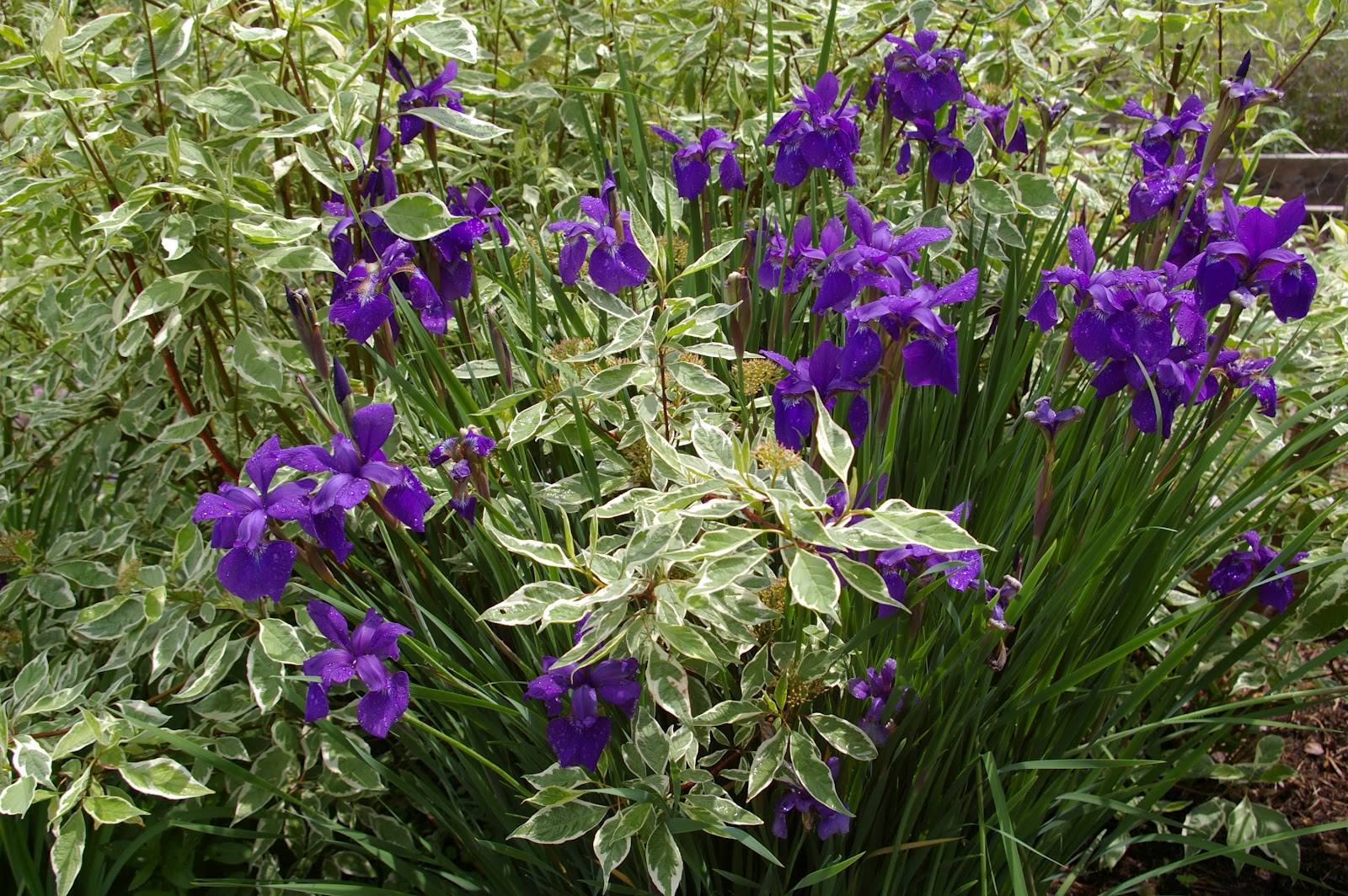
The perfect low maintenance interweaving- vigorous Siberian irises underplant and intertwine with a variegated redtwig dogwood.
One of the most vigorous self sown perennials in my gardens is feverfew. I have to admit, I love this plant. It makes a great cut flower, always available to me, an excellent filler in any arrangement. It grows in my hot, sunny courtyard and in the shade. I let it seed into my wild and wet shrub border where the aromatic foliage helps to throw off the noses of the deer. Naturally, this is a REALLY heavy self sower and I have to be vigilant in the spring that it doesn't take over the landscape. It's easy to spot; if you miss it, you will smell the pungent foliage as you are feeding, weeding, and mulching.
I LOVE this! Feverfew seeded in amongst the branches of Physocarpus 'Centerglow'.
Maclaeya seeded next to Physocarpus 'Center Glow'
Not everyone can garden like this. To some folks, these plants are a nuisance to be eliminated from their orderly gardens. Not me. I find the combinations that they create an inspiration. As I continue to grow as a gardener and a designer, I will use these wonderful interweavings to make magic in the garden.

Sunday, February 12, 2012

Flowers Having Fun

Lupines embrace a rose
Day 25
The Daily DuBrule


I am in a playful mood today. I have spent a lot of time lately picking out fun photos of "plants in love" or "fooling around". I get such a kick out of coming upon this secret love life that flowers have. It is delightful to think that every day is Valentine's Day to the flowers in our world!


I have also been thinking about the principle of Feng Shui that to enliven your relationship sector you should use powerful symbols of love (such as hearts) or things in pairs.


How fitting it is to study these images when the rest of the world is turning to commercial displays of love. 


Say it with flowers!
Peas lovingly intertwine with 'Bull's Blood' beets

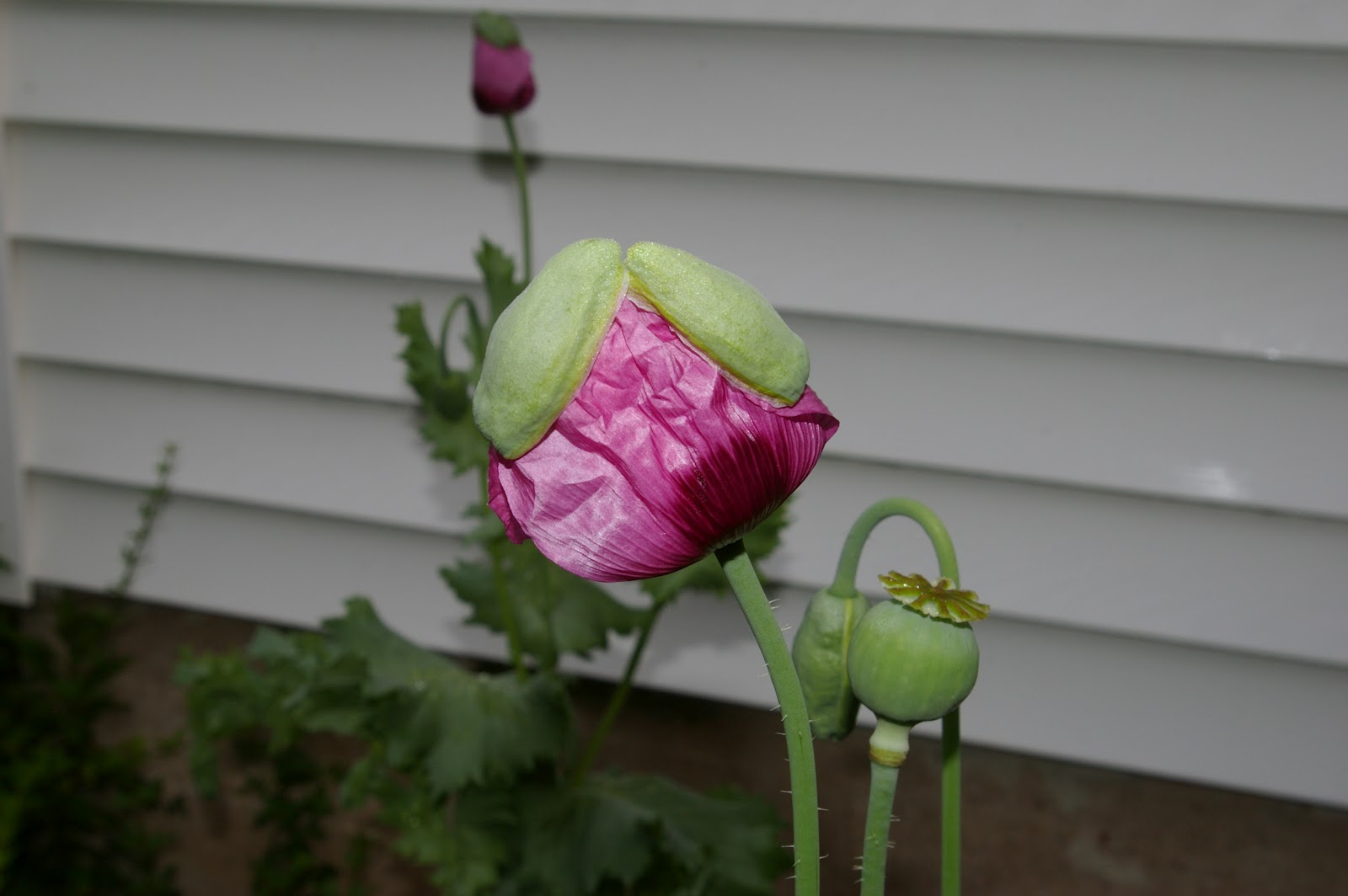
   Breadseed poppies with twin caps

  
Broom blooms with yellow Doronicum daisy
The happy couple- a pair of Allium 'Mt.Everest' flowers have a baby floret


'Gold Plate' yarrow popping out of the middle of a hydrangea
The bees made a smiley face on my self sown giant sunflower!

Saturday, February 11, 2012

Why I Love Bachelor's Buttons

Centaurea montana 'Amethyst in Snow'

Centaurea montana 'Amethyst Dream'


Day 24
The Daily DuBrule

I am constantly being asked to give talks about Succession of Bloom in the Perennial Garden. I wrote a book about this subject, specific to Connecticut, tracking when plants bloom by variety. I did this because I was completely frustrated with the general bloom period descriptions in books and catalogs that are written for the entire country, not our state.

When plants bloom is key to an all-season, colorful garden. But when plants emerge is also important. April can be a tough month in the garden if you haven't invested in spring blooming bulbs or flowering shrubs. Many perennials are still dormant, or slowly emerging. You get so excited about the flowers of spring and just keep walking around your borders saying "come on, grow!" That is why I love plants that "bulk up" early. What that means to me is a plant that emerges with a strong crown of foliage and adds a good amount of greenery to the garden. Centaurea montana, also called perennial bachelor's buttons, fits that bill.

Ten years ago, I primarily grew the blue flowered form, the straight species. Always admired in the garden, it resembles a blue thistle flower. Then I found out about the pure white form. The real breakthrough came with 'Amethyst in Snow', pictured above. I was in love. What a gorgeous bi-color blossom! Last year, I got my hands on 'Amethyst Dream', a solid purple introduction. Purple is my favorite color and I was in heaven.

I like Centaurea montana because it is versatile. It will grow in sun or partial shade and in almost any kind of soil. The flowers begin blooming in late May and continue into mid to late June, giving me color when the May flowers are fading and then happily combining with the June bloomers. If you deadhead it, you will prolong the bloom. After all flowering is done, I cut the flower stalks right down to basal foliage. By then, there are so many other plants filling out the garden and blooming their hearts out that you don't miss this plant.

I use perennial bachelor's buttons under and near plants that take a long time to sprout and leaf out in the spring. Butterfly bushes, Caryopteris, ferns, hydrangeas, Eupatorium, Hibiscus, Asclepias are just a few of the plants that come to mind. It is a great design trick that keeps your garden full and lush every month of the growing season.